


A-eros-dynamics
It was her time in the youth ranks that most influenced her, Lisa tells us. Living out her passion, the discipline, the perseverance, all of that was a matter of course. Through training, talent and a certain ease – the joy of sport – she worked her way right to the top from a young age. Countless medals at German championships, as well as at World Championships on the road and on the track, with the Olympics on the horizon.
However, significant changes in her family life and in the environment at the sports school in Erfurt altered the way she experienced her sport – and the ease with which she had previously approached it. Suddenly left to her own, she became aware of defining characteristics of her life up to that point: “Up until now, I’ve just been functioning, but I didn’t know myself at all.” Her identification was purely that of a cyclist.
She began to experience stagnation in the high standards she set for herself, along with self-doubt and fears she’d never felt before. Fear of ‘only’ finishing fourth at a World Championship, fear of the final sprint at that World Championship, fear of confrontation and of being compared to others. A German Championship title in the points race was suddenly worth nothing. Self-doubt about “still belonging there” – whilst preparing for the track World Championships in the four-person event, she asked herself: “What am I doing here?”.
Joining the German Armed Forces’ sports development programme after leaving school did not alleviate her personal stagnation; rather, it ultimately increased her dissatisfaction at not making progress. After it was made clear to her by the very top that she “had to” pursue her career as a competitive athlete, and that sport as a profession “didn’t have to be fun”, the implications of what it meant for her to organise her life around cycling became clear: “being dictated to from the outside”. “You’re stuck in the system and everyone’s telling you what to do.” It was the Other who decided.
Following this instant of the glance, Lisa took one decisive step: taking distance. And from her sporting circle – especially from those Others who had previously played a decisive role in shaping her existence as an athlete – she was branded with a label: a failure.
Having been let down, she let go herself. “Hitting rock bottom was a liberation.” There were no more expectations, no more people telling her what to do, no more “musts”. Nevertheless, that rock bottom was hard and cold: “I never had any help” and at the same time faced the existential task of “finding myself again”. In the process, she learnt to “accept myself, find my own instincts and listen to them” and, moreover, to rebuild everything from scratch. “In the end, it all made sense”, because now “no one was telling me what to do any more and I could choose who I wanted to work with and how”. When asked why she carried on with cycling, Lisa replies: “It’s all or nothing. I do it from the heart; it’s my passion”. And this is where the German meaning of Leidenschaft (passion) comes into play: this is how Lisa went from suffering (Leiden) to creating (schaft – schaffen).
And she came back – independent, grateful for the lessons learnt, and often performing better than before. Now the focus was once again on what cycling means to her. “Ultimately, meeting my own standards was more important to me than the Olympics.” She has moved away from wanting, or even feeling obliged, to meet the expectations of the Others.
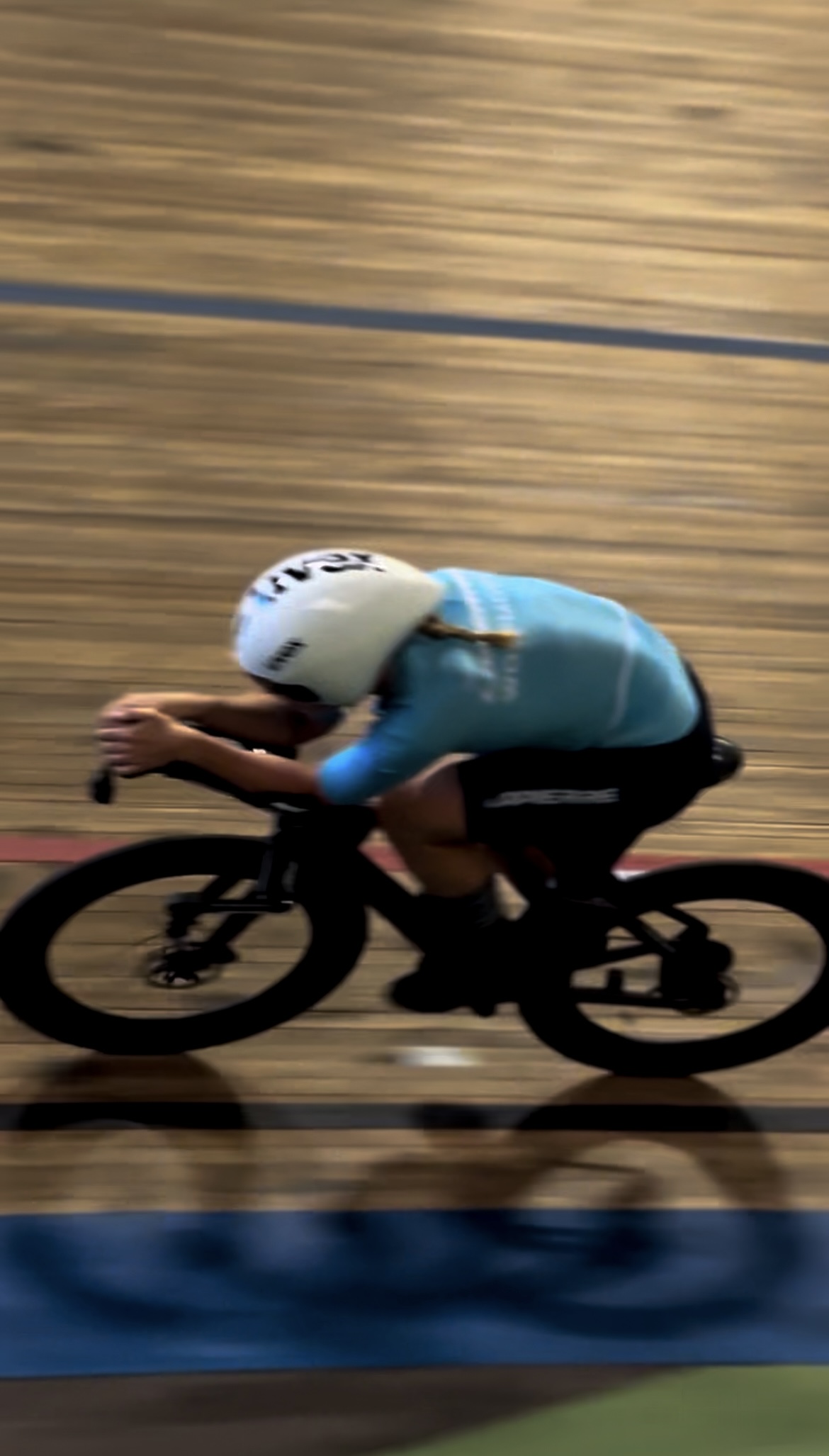
Now, following her career as a professional athlete, she promotes what matters to her: competitive sport for young athletes. To this end, Lisa has founded her own club, where she puts into practice what she herself believes in. Here, she “continues the world she has built for herself, with passion and in respectful cooperation with Others”. She also works as a coach specialising in aerodynamics on the track. A-eros-dynamics. Eros, the life drive according to Freud. And so Lisa’s life drive continues to gather pace.
Find out more about Lisa’s aerodynamics training courses here: